Web development
Custom website or template: what does your business actually need?
Compare custom website development and templates by business goals, content, integrations and ongoing costs. A practical guide from codefrem.
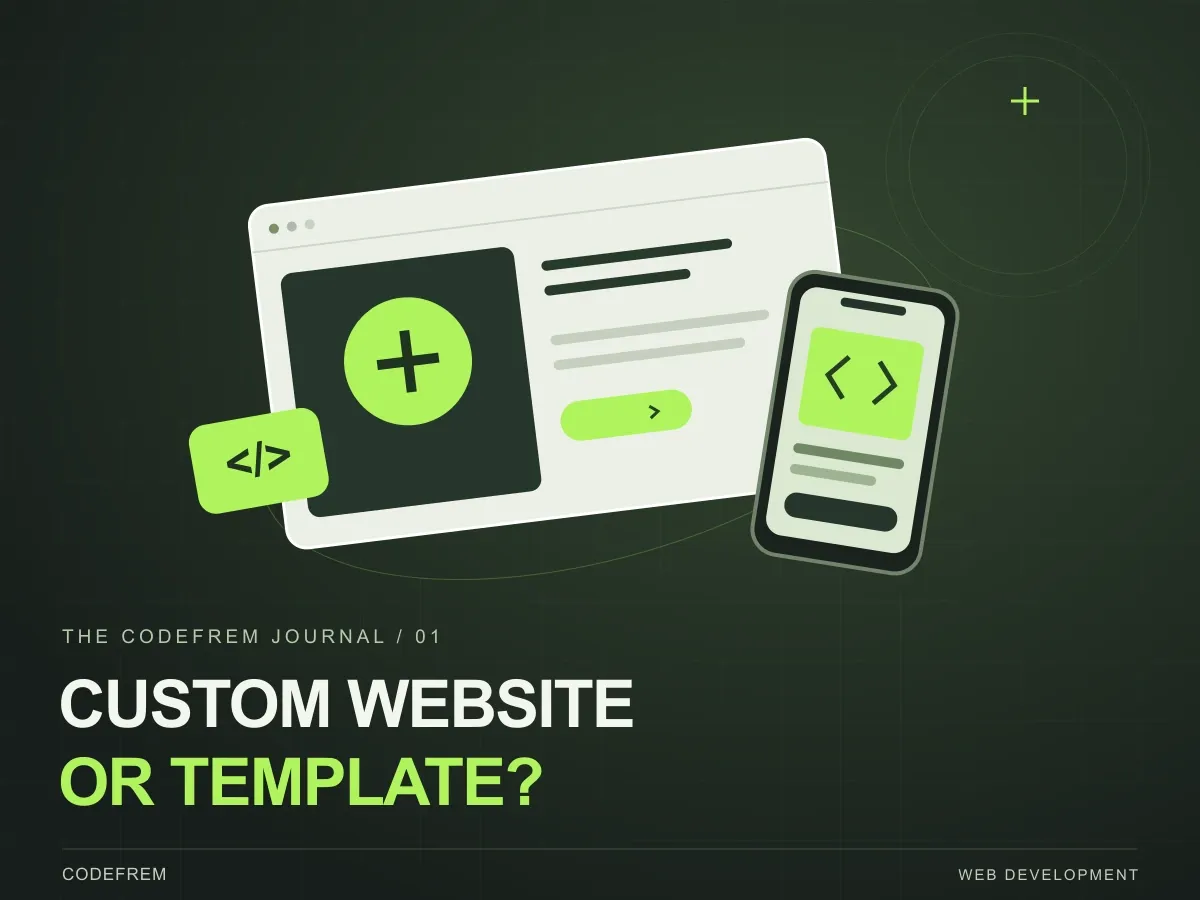
A new website starts with a business decision long before it becomes a design decision. A local service business needs visitors to understand its offer and send an enquiry. A retailer needs customers to find products and complete a purchase. A software business may need a product demo and an account area. The right build depends on that job, not on how many effects fit on the homepage.
THE SHORT VERSION
Choose the simplest approach that supports your real customer journey, gives your team control and leaves room for the next stage of your business.
1. Define what the website needs to do
Write down the main action a visitor should take, the information they need first and the person who will maintain that information. These three answers make it easier to compare a template with a custom build. They also prevent a long feature list from hiding the most important part of the project.
For example, a consulting firm may need service pages, credible project examples and a short contact form. A booking business may also need availability, payments and confirmation emails. Those workflows affect the choice more than the number of pages does.
- Who is the main audience, and what problem brings them here?
- What is the primary conversion: an enquiry, booking, purchase or signup?
- Which systems must connect to the website?
- Who will update the content after launch?
2. When a template is a good fit
A template can be a sensible starting point when your content follows familiar patterns and you need to launch a straightforward site. An existing page structure reduces the number of layout decisions. Your team can spend more effort on clear writing, useful images and the details customers actually ask about.
Check the template with your own content before choosing it. A beautiful demo may rely on unusually short headlines or carefully cropped photography. Test a long service name, a real product description and the mobile navigation. Also confirm that you can edit titles, descriptions, URLs and image descriptions without relying on a developer for every change.
3. When custom development earns its place
Custom website development becomes useful when the structure, interaction or integration needs are difficult to express within a template. Examples include a tailored quoting flow, a customer portal, a complex catalogue or a brand experience that needs a carefully designed reading journey.
Custom does not mean rebuilding every component from scratch. A good implementation can use established tools for content, payments and hosting while tailoring the parts that matter to your business. The tradeoff is that design decisions, quality assurance and ongoing ownership need a clear scope. Ask for a written explanation of what is custom and why.
4. Compare the cost of ownership
The initial quote is only one part of the decision. List hosting, platform subscriptions, paid extensions, content updates and support. Ask how backups work, who controls the domain and what happens if you change providers. A small launch fee can become less attractive if routine changes require several subscriptions or repeated manual work.
Compare proposals against the same scope. Include mobile layouts, accessibility checks, redirects from an existing website, analytics setup and form testing. Agree on what a successful handover looks like: access to accounts, source files where applicable, editing instructions and a support contact.
5. Make the decision with one real page
Before committing to a full build, map one important page using real content. Include its heading, supporting evidence, frequently asked questions and next step. Review the page on a phone. If a template handles that journey cleanly and leaves your team comfortable with editing, it may be enough. If the compromises affect how customers understand or use the offer, a custom approach deserves a closer look.
At codefrem, our web design and development work connects page structure, interface design and implementation. Bring your goals, existing content and required integrations to the first conversation. A clear brief makes it possible to recommend a scope that fits the business instead of simply adding more features.